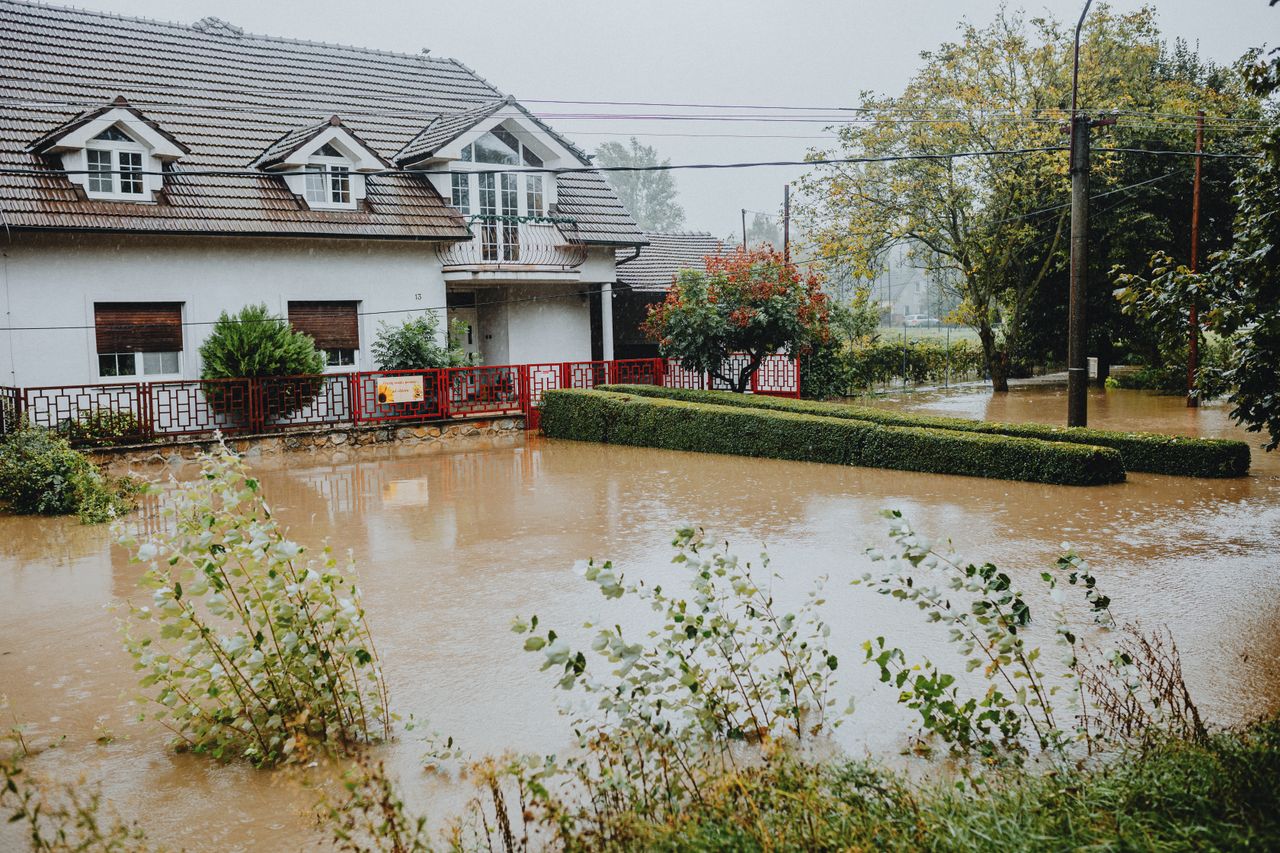
Most gardeners know that heavy rain can leave a lawn looking more like a pond and turn borders into muddy patches overnight. What is less obvious is what happens to all that water once it reaches paths, patios, drives and drains. A garden has its own drainage system, even if we rarely think of it that way, and the way a garden is designed can make a surprising difference when the heavens open.
This matters particularly during short, intense downpours. Instead of soaking gradually into the soil, large volumes of water can arrive within minutes. Hard landscaping, compacted ground, blocked gullies and overflowing gutters can all contribute to water moving away from where it is needed and towards places where it can cause problems.
Gardens Are Part Of The Drainage Network
A garden might seem separate from the wider infrastructure of a town, but it is actually part of the same water story. Rain falling on a roof, patio or shed has to go somewhere, and gardens can either help absorb that water or encourage it to run quickly towards drains.
Lawns, borders and planted areas provide opportunities for rainwater to soak into the ground. In contrast, extensive paving and compacted soil can leave water with fewer places to go. When several properties in the same area experience the same conditions, that additional runoff can put pressure on local drainage systems.
This is why searches for blocked drains Reading can become particularly relevant after periods of heavy rainfall. A blockage may have been developing for some time, but a sudden downpour can be the event that finally exposes it.
What Can Gardeners Do About Heavy Rain?
Good garden design is not simply about choosing attractive plants. It can also be about giving rainwater somewhere useful to go.
Planting beds can help slow down rainfall, while healthy, well-aerated soil allows more water to infiltrate naturally. Rain gardens, permeable paving and strategically positioned planting can all help reduce the amount of water rushing towards conventional drainage points.
Even small changes can make a difference. Keeping gutters and drainage channels clear of leaves, avoiding unnecessary soil compaction and making sure water is not being directed towards the house can all help.
A Garden Can Help Rather Than Hinder
Heavy rain is increasingly something gardeners have to plan for. Just as plants need to cope with periods of drought and heat, gardens also need to deal with sudden deluges.
The answer is not necessarily more drains. Sometimes it is about creating a garden that works with water rather than immediately trying to move it away. A lawn, border, tree, permeable path or rain garden can all play a role in slowing rainfall down and allowing the ground to absorb more of it.
In that sense, good gardening is also a little bit of infrastructure planning. The plants may be the most visible part of the garden, but beneath them is a network of soil, roots and drainage that becomes particularly important when the next heavy shower arrives.
Featured image credit: by Helena Jankovičová Kováčová via Pexels.